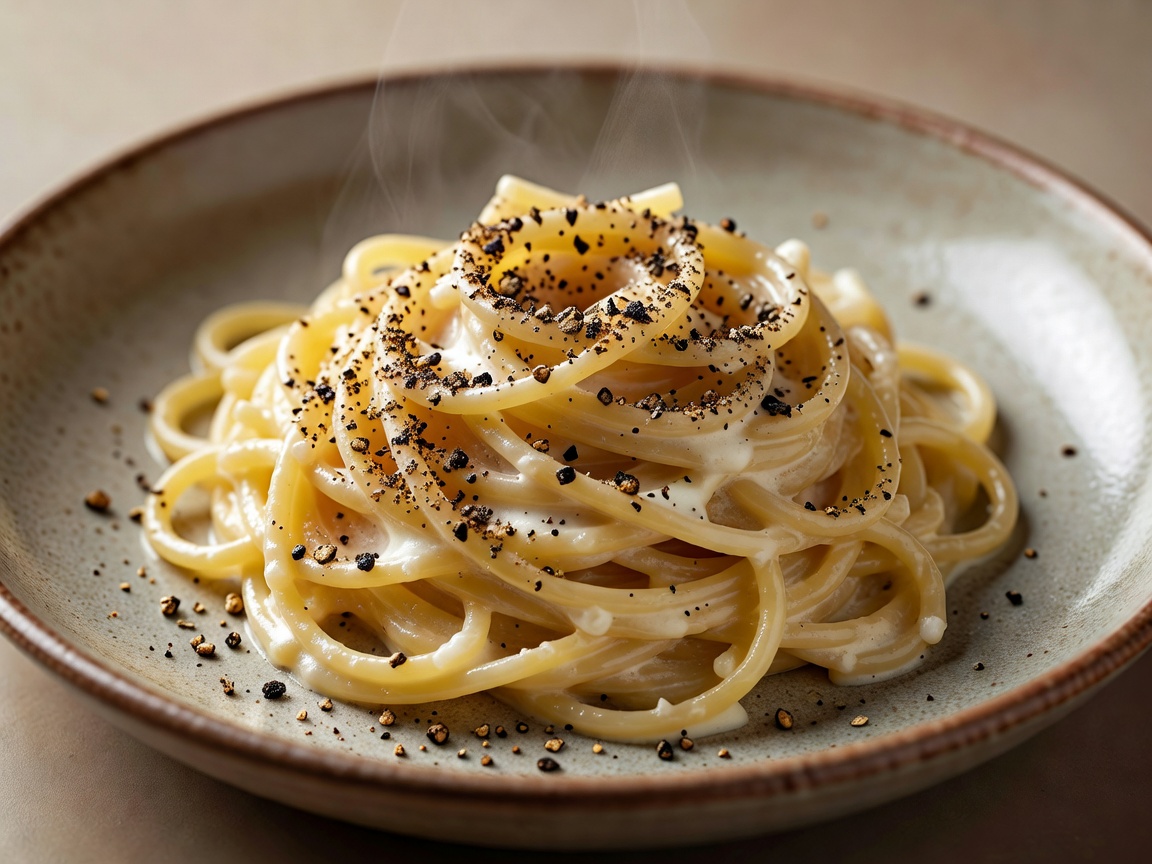
History Born in the Pastoral Hills
The origins of Cacio e Pepe trace back to Transhumance shepherds migrating across the Apennine mountain trails in Central Italy. Shepherds carried non-perishable provisions: dried durum wheat pasta, hard aged sheep's milk cheese (Pecorino Romano), and dry black peppercorns.
The heat from the black pepper helped the shepherds stay warm during cold winter nights, while the sharp saltiness of the aged Pecorino replenished depleted electrolytes.
The Physics of Emulsification
The magic occurs when starchy pasta cooking water (rich in amylose starch molecules) is vigorously tossed with finely microplaned Pecorino Romano cheese at a temperature between 60°C and 65°C. Too high, and the cheese proteins coagulate into rubbery clumps; too low, and the cheese refuses to dissolve into sauce.
The Essential Rules
Never use cream, butter, or oil. Authentic Roman culinary discipline relies solely on controlling water temperature and starch saturation. Always toast whole Tellicherry or Sarawak peppercorns in a dry skillet before cracking to release volatile piperine oils.
Learn more about European food geographic designations at the official EU Geographical Indications Registry.